The Kaibab deer population has been a subject of interest for wildlife biologists and conservationists for decades. The Kaibab Plateau, located in Arizona, is home to a large population of mule deer, which has been closely monitored and studied. The data collected from this population has been used to create a printable graph worksheet, which provides a unique opportunity for students and researchers to analyze and understand the dynamics of population growth and decline.
The Kaibab printable graph worksheet with data table is a valuable tool for teaching students about the importance of data analysis in conservation biology. By analyzing the data, students can gain insights into the factors that affect population growth, such as food availability, predation, and disease. This hands-on approach to learning helps students develop critical thinking skills and understand the complexities of ecosystem management.
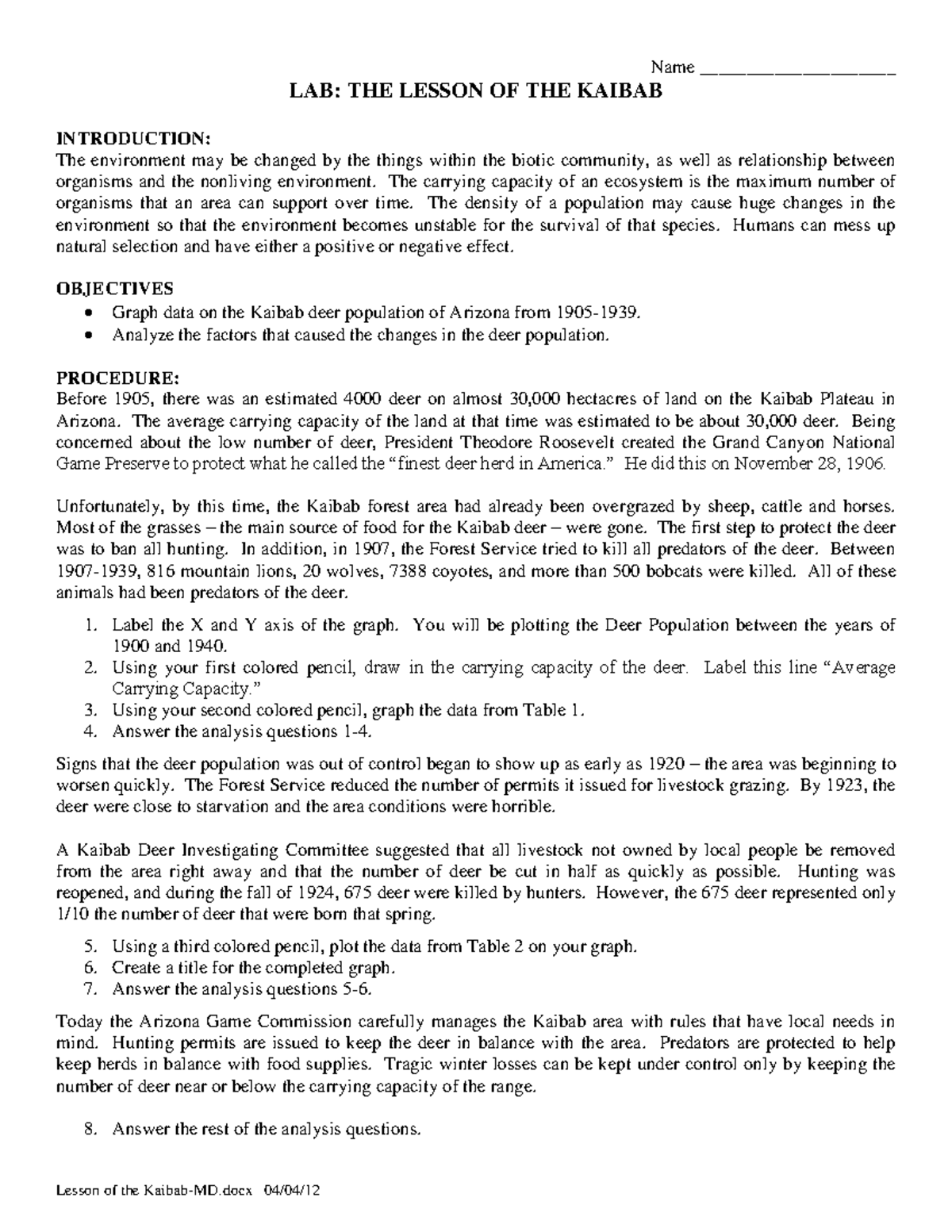
Kaibab Deer Population Changes Analysis Lesson Biology Lab Studocu
Understanding the Kaibab Deer Population
The Kaibab deer population is a prime example of how data analysis can inform conservation efforts. By studying the population’s growth and decline, researchers can identify key factors that contribute to these changes. For instance, the data may show that the population grows rapidly when food is abundant, but declines when food is scarce. This information can be used to develop effective conservation strategies, such as habitat management and wildlife corridors.
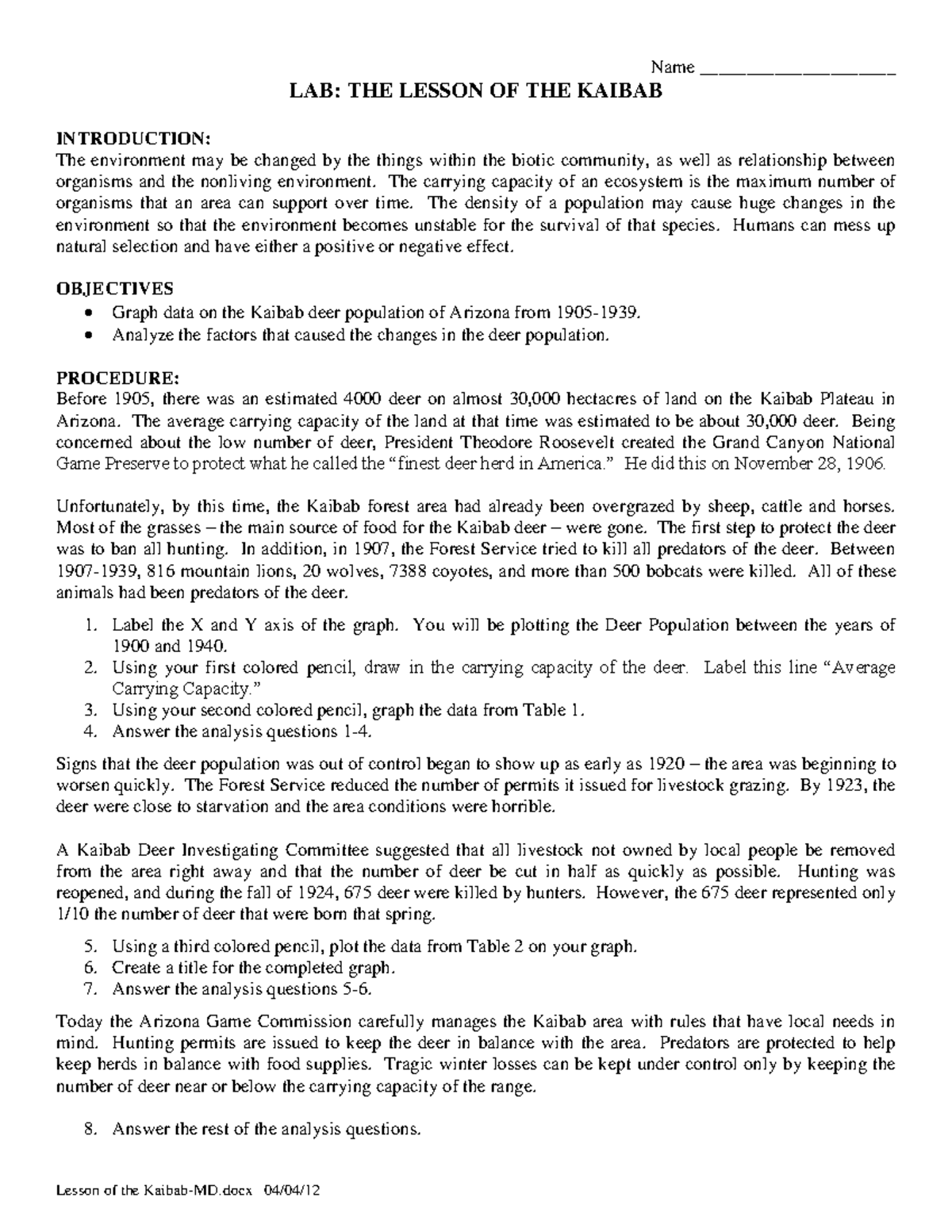
Kaibab Deer Population Changes Analysis Lesson Biology Lab Studocu
The Importance of Data Analysis in Conservation Biology
Data analysis is a crucial component of conservation biology, as it allows researchers to make informed decisions about how to manage and protect populations. The Kaibab printable graph worksheet with data table provides a comprehensive dataset that can be used to teach students about the importance of data analysis in conservation biology. By applying statistical techniques and graphical analysis, students can gain a deeper understanding of the complex relationships between population dynamics and environmental factors.
Applying the Lesson to Real-World Scenarios
The lesson of the Kaibab printable graph worksheet can be applied to real-world scenarios, such as managing wildlife populations, monitoring ecosystem health, and developing conservation strategies. By analyzing data and identifying trends and patterns, conservationists can make informed decisions about how to protect and manage populations. This approach can be used in a variety of contexts, from managing deer populations in national parks to monitoring the health of coral reefs.
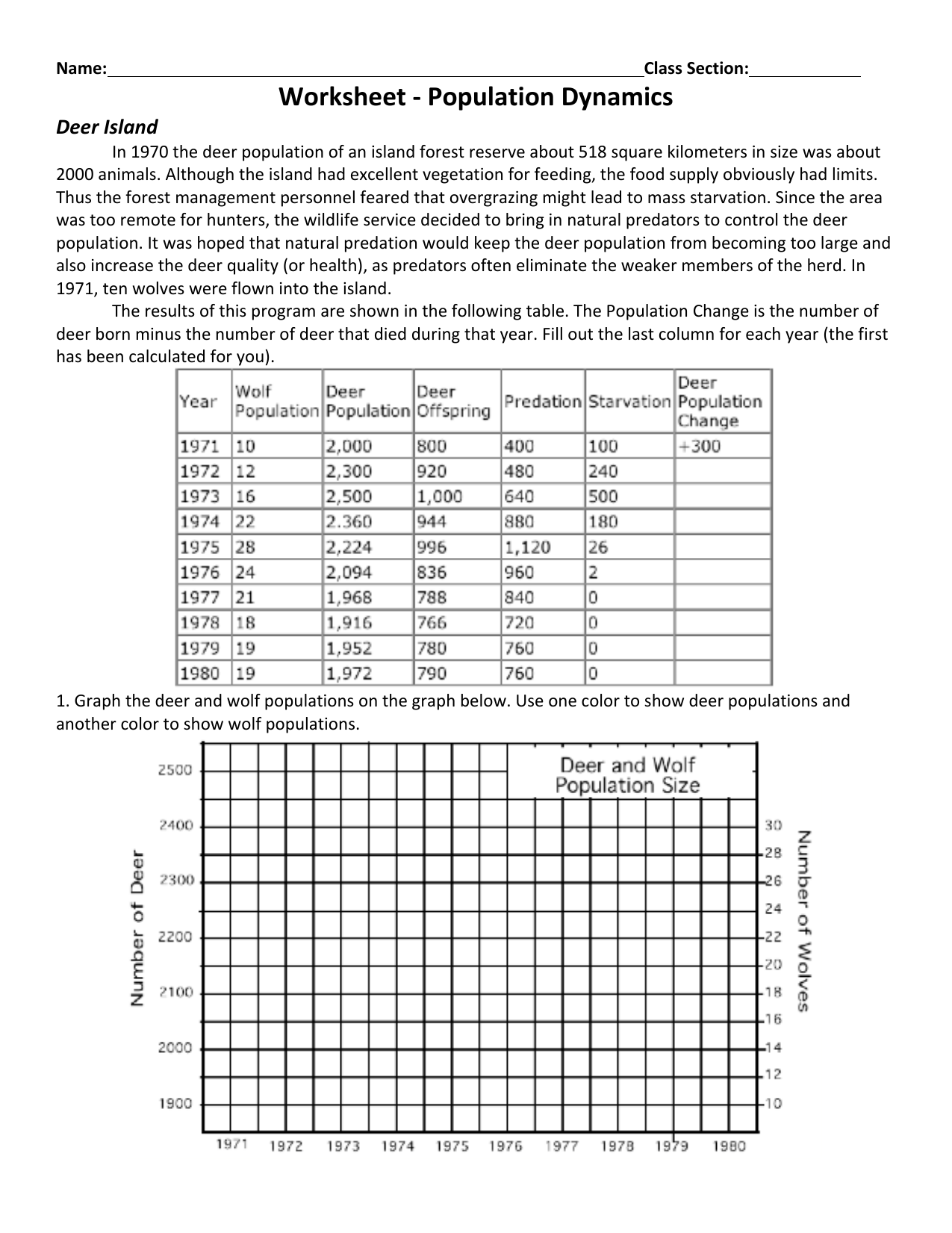
Population Dynamics Worksheet Deer Island Kaibab
In conclusion, the Kaibab printable graph worksheet with data table is a valuable resource for teaching students about the importance of data analysis in conservation biology. By applying the lessons learned from this worksheet, conservationists can develop effective strategies for managing and protecting populations, and ultimately contribute to the preservation of biodiversity and ecosystem health.
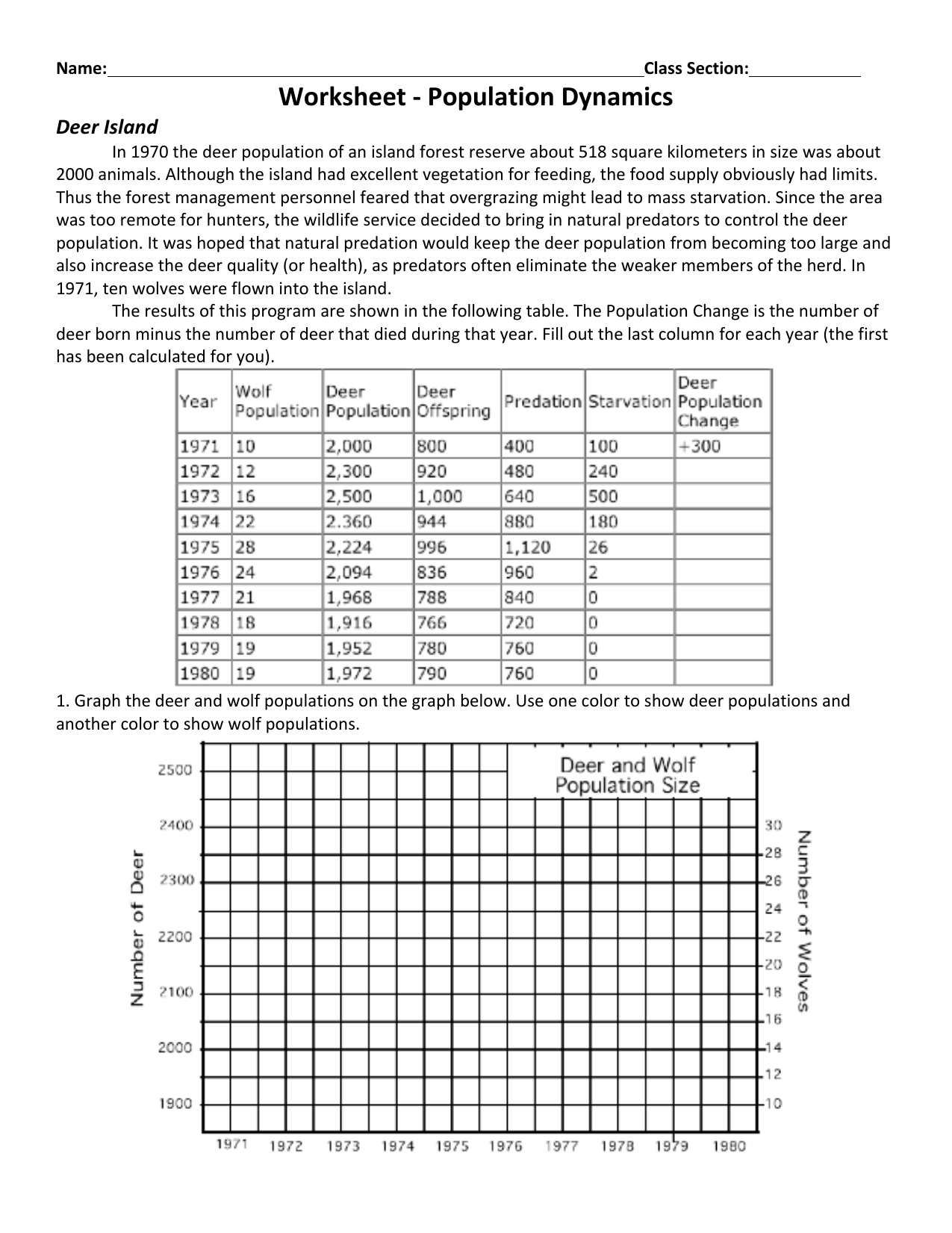
Population Dynamics Worksheet Deer Island Kaibab
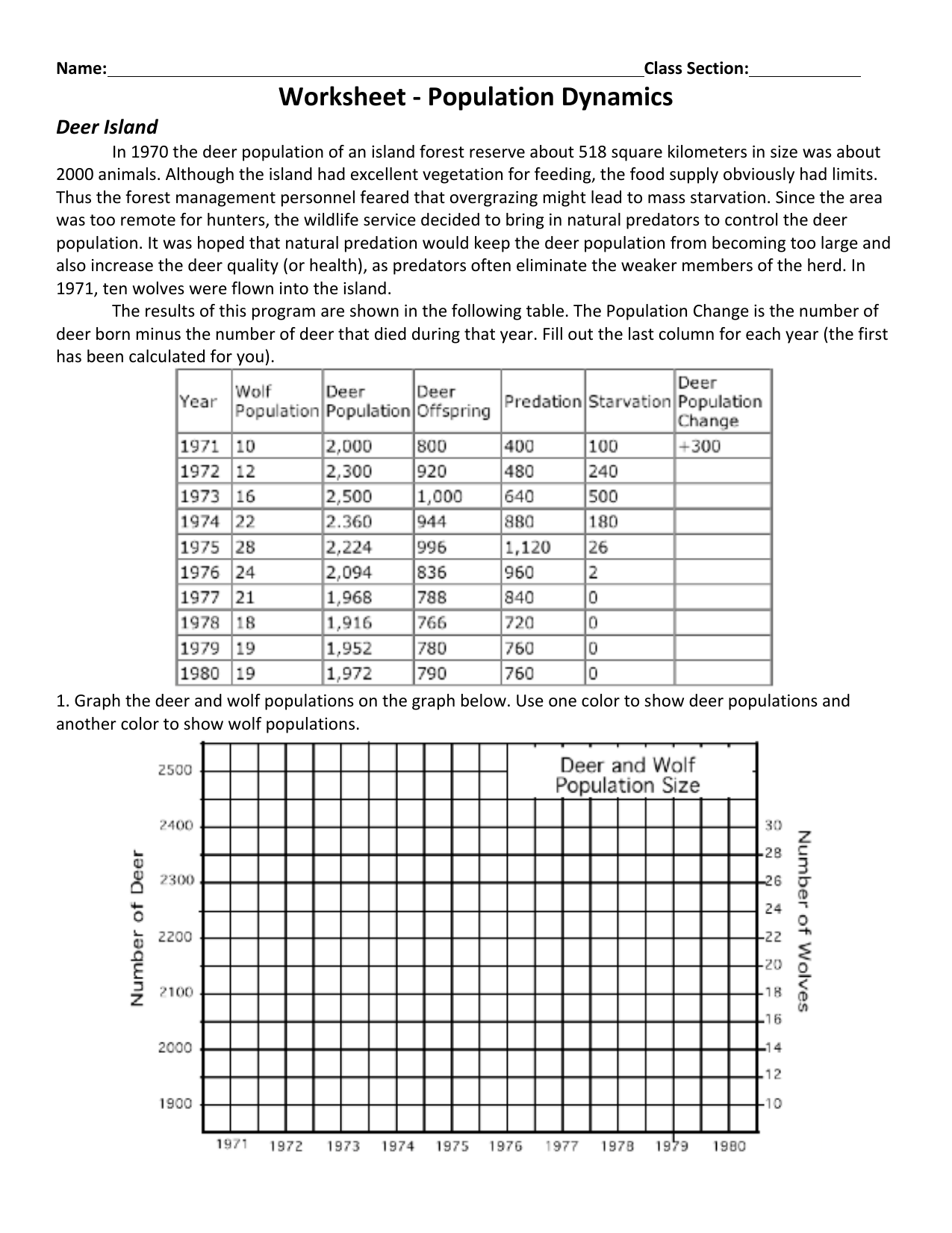
Population Dynamics Worksheet Deer Island Kaibab